
Unlearning Modesty, Part Two: Fear
The day we learned that feeling safe matters as much as feeling free.
After discovering our first secluded nude beach, we fell in love with naturism faster than we expected.
At first, every visit felt like a small act of courage. Then, slowly, it became something gentler. The nervousness faded. The awkwardness softened. What had once felt impossible began to feel surprisingly ordinary.
That quiet beach gave us space to unlearn at our own pace. Most days, there were only a few regular visitors scattered far apart across the sand. Some read, some swam, some walked along the shore, and some simply rested in the sun. Nobody seemed especially interested in anyone else.
For two people still carrying years of cultural conditioning around nudity, that distance mattered. There was no pressure to socialise, no need to explain ourselves, and no feeling that we were being watched. We could arrive quietly, undress nervously, settle into the day, and leave a little more comfortable in our own skin.
Over time, our confidence grew. The beach that had once felt daring began to feel familiar. We learned what to pack, where to sit, and how to read the atmosphere. The more we returned, the more we understood that naturism was not only about being naked. It was about feeling safe enough for nakedness to become ordinary.
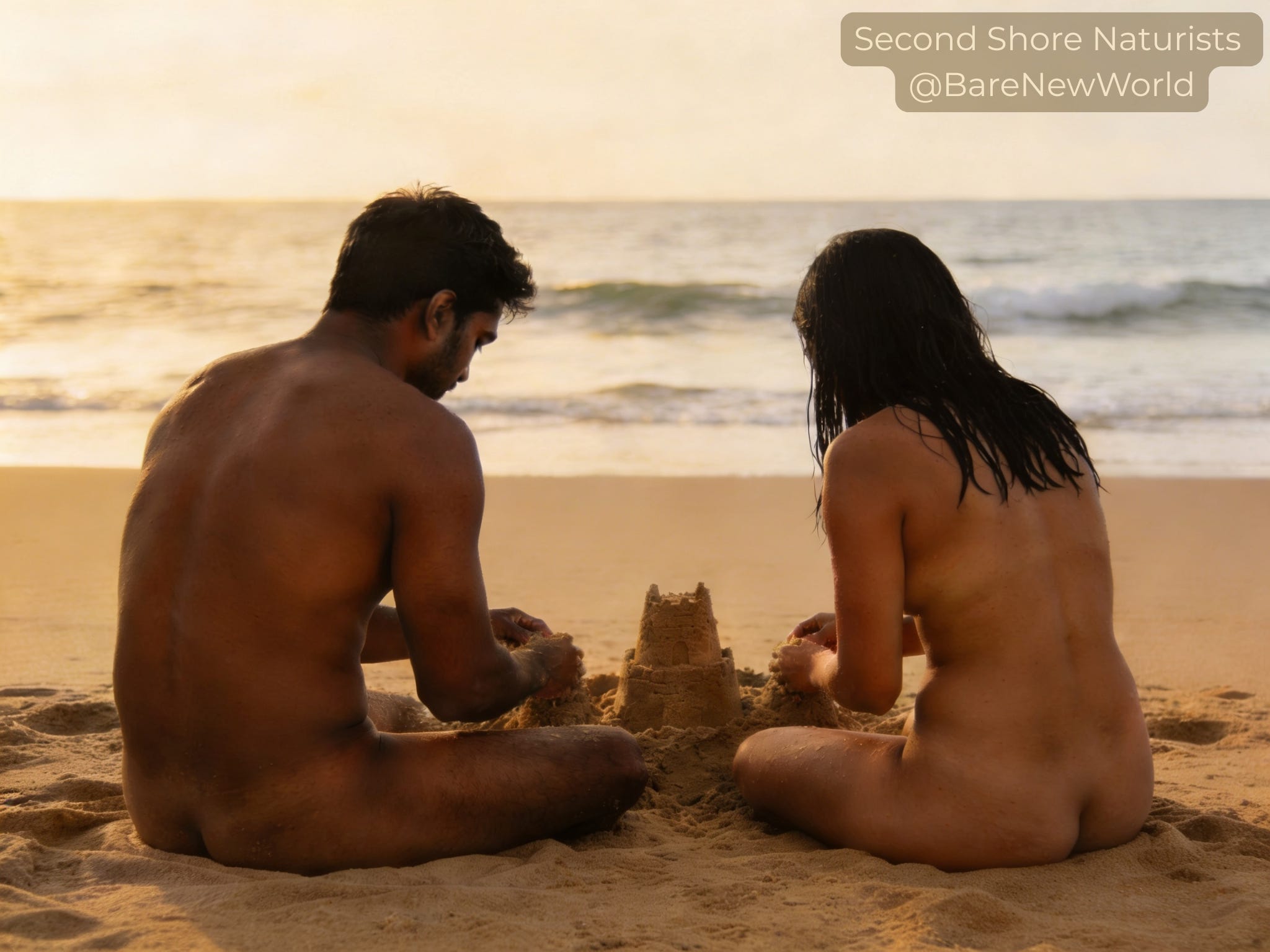
Before fear entered the story, naturism had begun to feel simple — sand, sea, quiet afternoons, and the gentle ordinariness of being unguarded.
Eventually, we learnt about another nude beach several hours away. Unlike the quiet beach we had grown used to, this one was officially recognised, larger, and much better known. It had a reputation as an established nude beach, the kind of place people travelled to visit.
We were curious. Part of us wanted to know what a more established naturist environment would feel like. So, during a long weekend, we decided to go.
The atmosphere was completely different from what we knew.
When we arrived, the beach was already full of people. Almost everyone we saw appeared to be white Australians or visitors from backgrounds very different to ours — couples, solo visitors, friendship groups, older regulars, younger beachgoers, all swimming, talking, reading, walking, and lying in the sun.
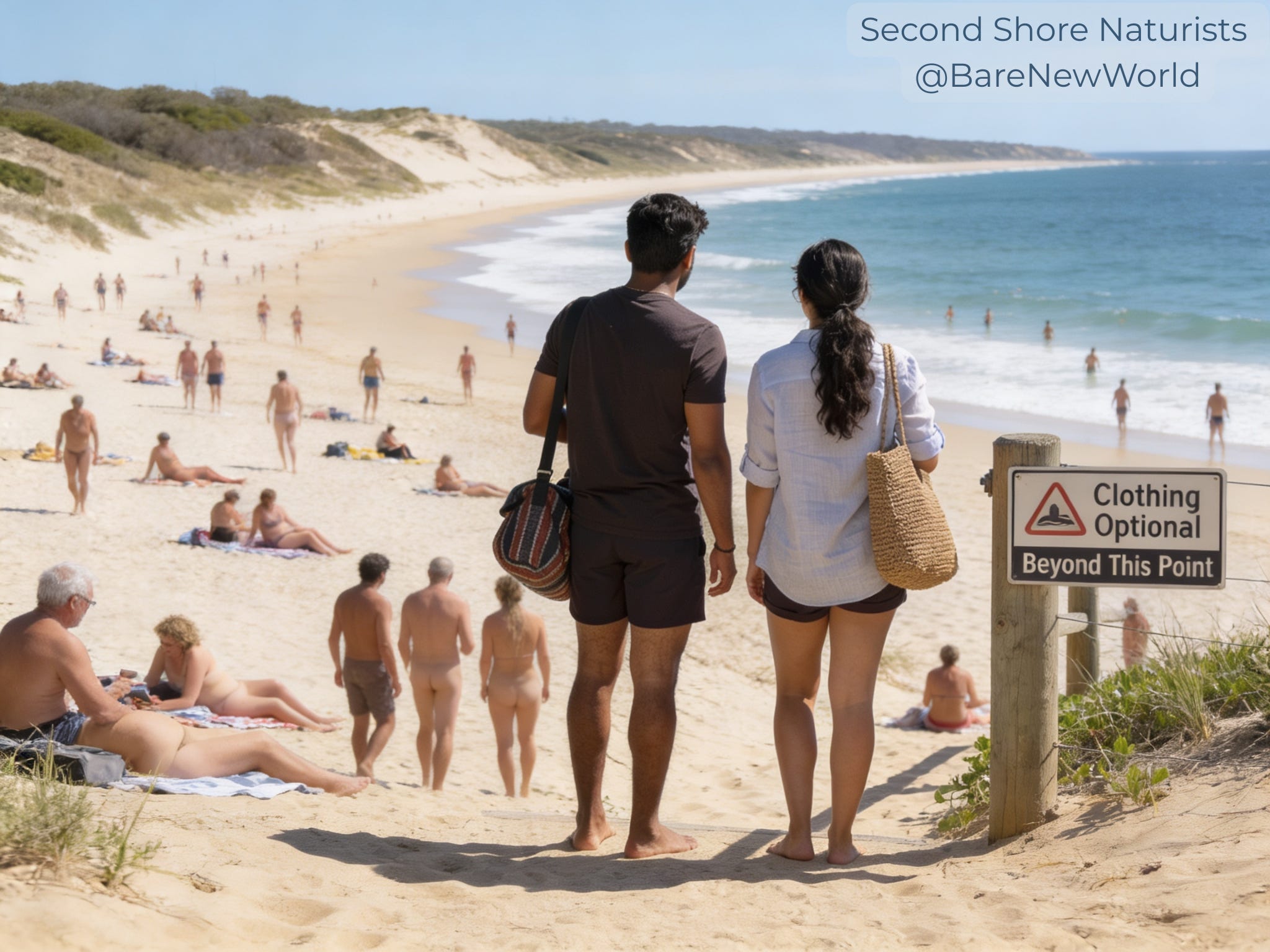
The larger beach felt like a threshold — more open, more visible, and very different from the quiet places where our confidence had first begun.
We had never seen so many unclothed people in one place before. At first, it overwhelmed us, not badly exactly, but enough to remind us how new we still were. Until then, our experience of naturism had been quiet and spacious. This was social, open, and much more visible.
After a while, the initial shock passed, and we began to see the beauty in it. There were bodies of every shape, age, size, colour, and condition. Ordinary bodies. Ageing bodies. Soft bodies. Confident bodies. Shy bodies. Bodies that were rarely represented honestly anywhere else.
Nobody seemed concerned with perfection. Nobody seemed to be performing. The beach felt lively, relaxed, open, and mostly respectful.
We found a quieter section of sand, laid down our things, undressed, and went for a swim. The water helped settle us. It usually did. There was something about being in the ocean without clothing that made the world feel simpler for a while. The body stopped feeling like a problem to solve.
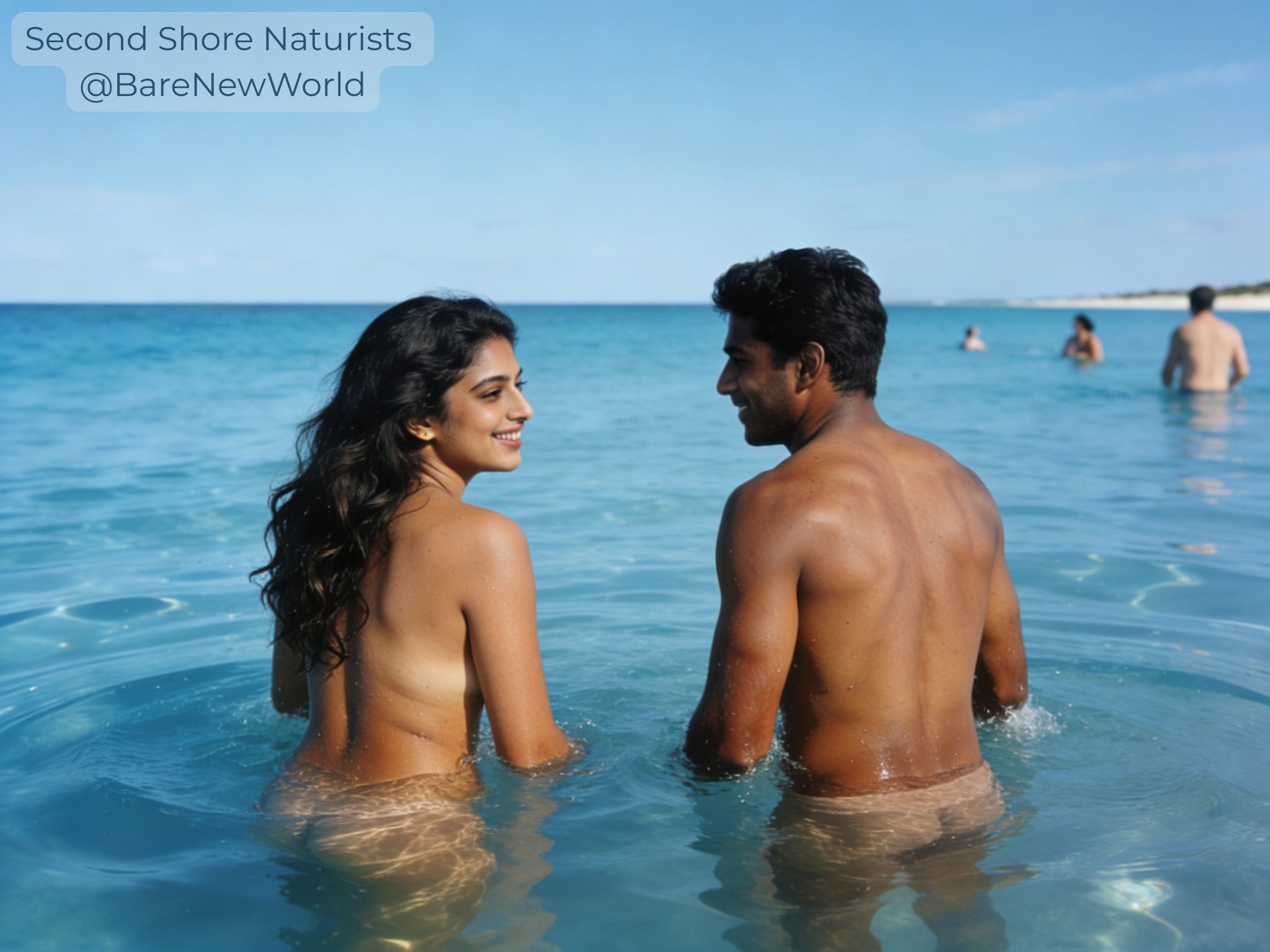
For a while, the water gave us back the feeling we had come for — freedom without performance, and the body at ease with sun, salt, and sky.
Then, as we were coming out of the water, a man crossed our path.
He was walking along the beach as we were heading back toward our things. At first, we thought nothing of it. Beaches are shared spaces, and people pass each other all the time. But something about the moment unsettled us.
He appeared to be Indian.
Looking back now, we know that detail needs to be handled carefully. His background was not the problem. His behaviour was. But in that moment, because of our own history and fears, the fact that he looked Indian affected us in a way we were not prepared for.
We were still in our mid-to-late twenties then, still new to Australia and naturism, and still learning how to separate this part of our life from the cultural world we had grown up in. He seemed older than us, perhaps in his forties, and his presence suddenly made the beach feel less separate from the life we thought we had left behind.
Until then, naturism had existed almost entirely outside our Indian identity. Nude beaches felt like part of this new country, this new life, this private space where we were learning to loosen old fears. Suddenly, those worlds collided, and a familiar anxiety rose in us immediately.
What if someone recognises us? What if someone judges us? What if this reaches back into the life we have kept separate? What if the shame we thought we were unlearning finds us here too?
We avoided eye contact and kept walking.
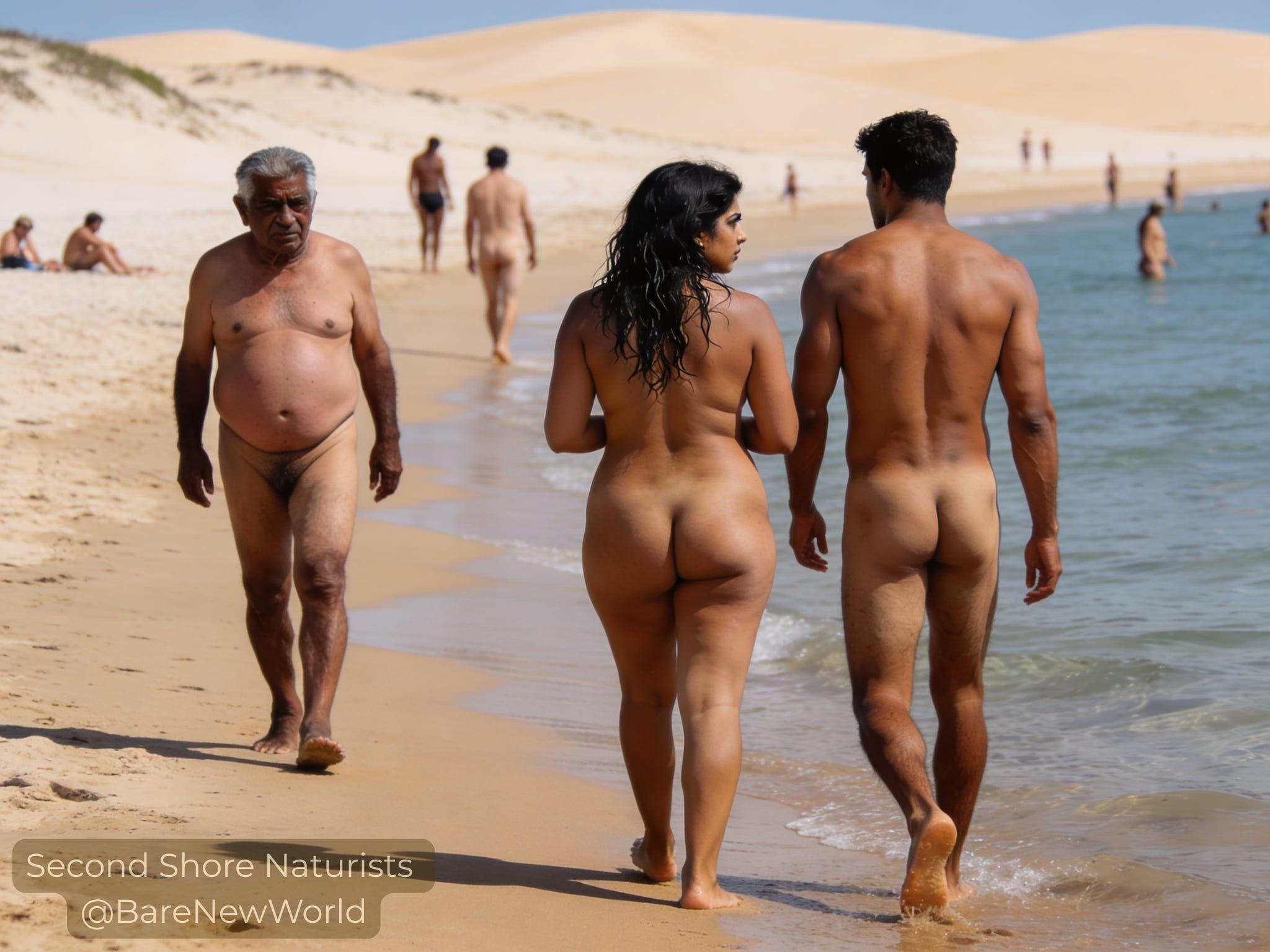
It was only a passing moment at first, but something in us tightened — old fears returning before we fully understood why.
After a while, he passed by and continued further down the beach. We relaxed a little, telling ourselves we had probably imagined the tension. We wanted the day to return to what it had been before.
A few minutes later, he came back carrying his belongings and set himself up very close to us, even though there was plenty of empty space elsewhere.
At first, we tried to ignore it. We told ourselves not to overreact. Perhaps we were simply feeling more exposed than usual.
But then came the staring.
Not casual glances. Not ordinary awareness. This was prolonged, uncomfortable attention — the kind that changes the atmosphere around your own body.
We still do not know what he intended. Maybe he was trying to make eye contact. Maybe he wanted to start a conversation. Maybe, in another context, we might have read the moment differently.
But in that moment, we were terrified.
Because he appeared to be Indian, our fear was not only about being watched. It was about being recognised, judged, and pulled back into a cultural world we had been trying to keep separate from this fragile new part of our lives.
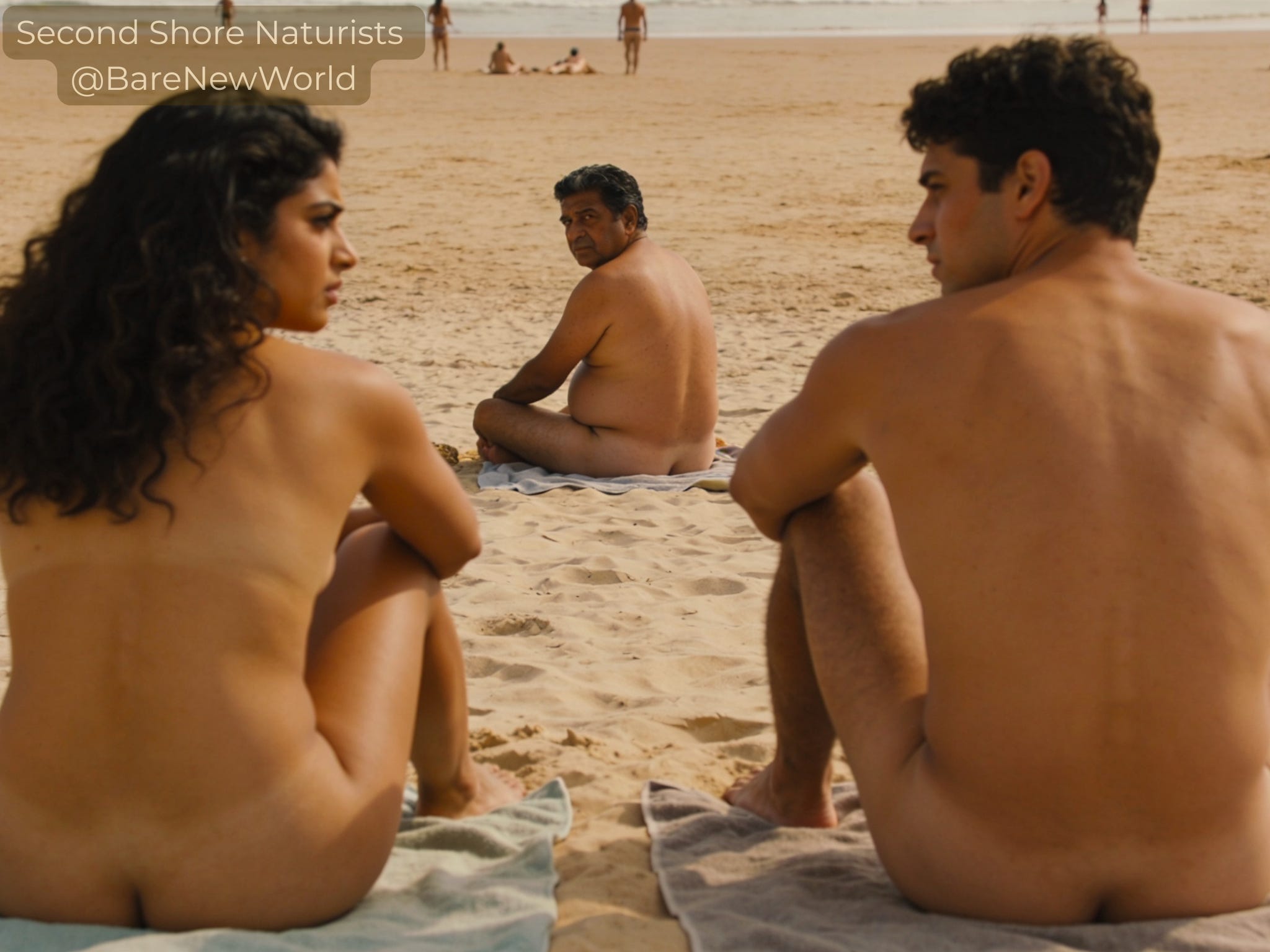
What had felt peaceful only minutes earlier began to feel exposed — not because of nudity itself, but because the safety around it had changed.
The ease we had slowly built disappeared almost instantly. For the first time in a naturist setting, our nudity no longer felt peaceful. It felt exposed. Every movement felt watched. Every attempt to relax felt interrupted.
Quietly, we gathered our things and moved to another part of the beach. A short while later, he moved again too. That was when we knew it was not accidental.
The rest of the afternoon became difficult to enjoy. Instead of swimming, resting, or being present, we became constantly aware of where he was. Eventually, we packed our bags and started walking back toward the car park.
To our alarm, he followed us there as well.
We loaded the car quickly and drove away in near silence.
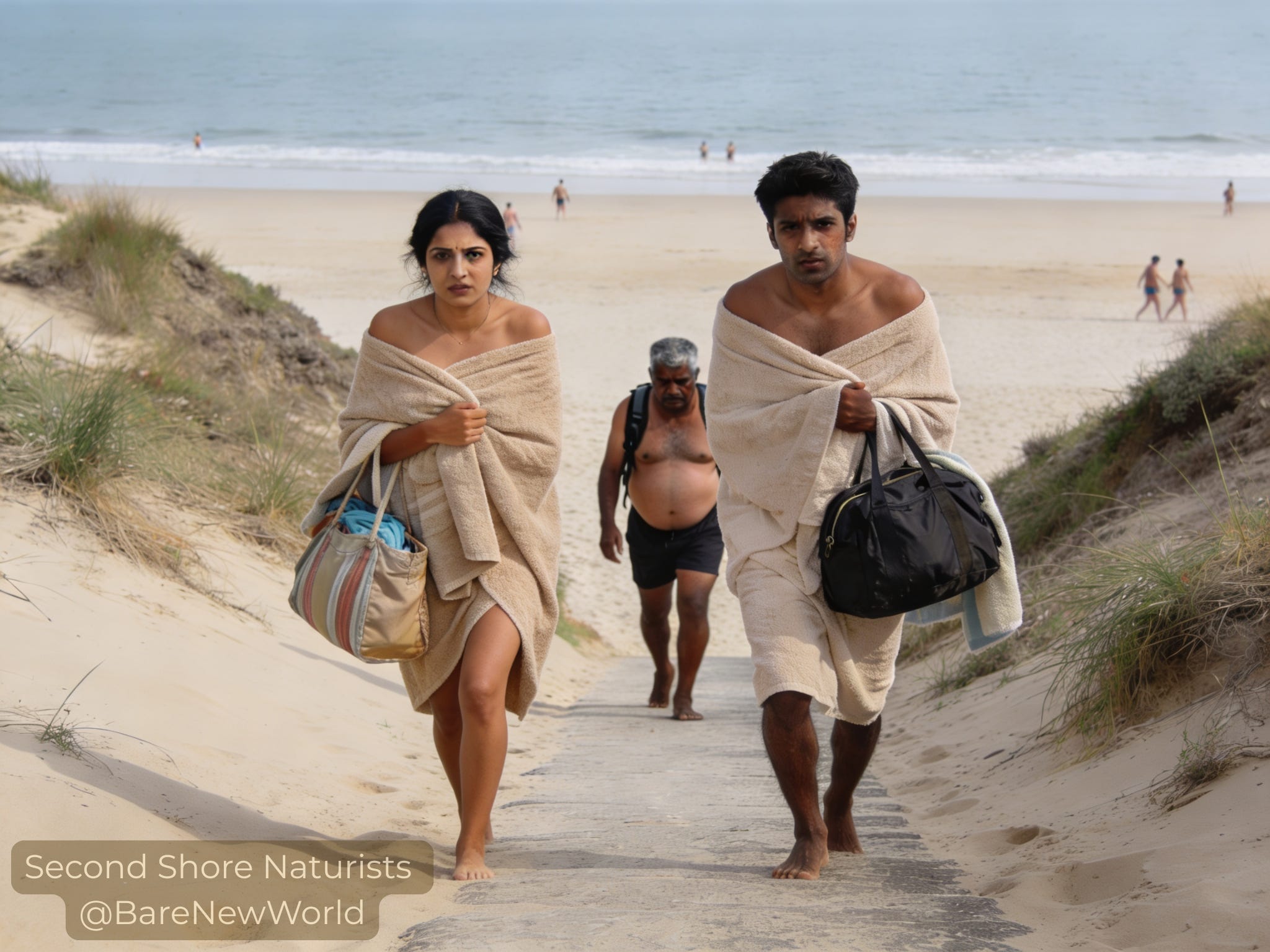
We left quickly and quietly, carrying more than our bags — the old fear of being seen, judged, and no longer safe in our own bodies.
For days afterwards, the experience stayed with us.
Part of what shook us was the behaviour itself. Naturism depends on respect. It depends on the unspoken understanding that nobody’s body is there for someone else’s entitlement. When that respect disappears, nudity can feel exposed in the worst possible way.
But another part of what shook us was more personal. The encounter reminded us that old fears do not disappear simply because we move countries or begin thinking differently. Some fears live deeper than logic. They sit inside the body, waiting for a familiar trigger.
Until that day, we had been slowly learning that nudity did not have to mean shame. But suddenly, shame felt close again. Not because we had done anything wrong, but because the old fear of being seen, recognised, judged, or exposed had returned so quickly.
That was hard to admit. We wanted to believe naturism had already freed us from those anxieties, but the truth was more complicated. Naturism had helped us begin unlearning shame. It had not erased the past.
For a while after that weekend, we stopped visiting nude beaches. We did not make a dramatic decision. We simply avoided going. Every thought of returning took us back to that afternoon: the staring, the moving, the following, the sudden loss of ease.
We missed the beach, but we no longer trusted the feeling we had once found there. That was when we understood something important.
Feeling free is not enough if you do not also feel safe.
Before that experience, we had thought of naturism mostly in terms of courage, body acceptance, and freedom. After it, we understood the importance of boundaries, respectful spaces, and the emotional safety that allows naturism to remain non-sexual and calm.
The problem was not naturism. The problem was behaviour that did not belong in naturism. That distinction mattered, even if it took us some time to feel it clearly.
Because despite everything, we still remembered what naturism had given us: the quiet beach, the first swim, the sunlight, the relief of not hiding from ourselves, and the strange ordinariness of bodies existing without shame.
We were frightened.
But we were not finished.
Somewhere beneath the anxiety, we knew we were not ready to give up the peace we had found.
We just did not yet know that the next step would not be another beach, but a different kind of naturist space altogether.
For new readers, you can learn more about who we are and why we write on our About page.
A note on images: To protect our privacy, some images used on this blog are AI-generated or creatively edited visual companions to our stories. They are intended to reflect the mood and meaning of our experiences, not to serve as literal photographs of us.